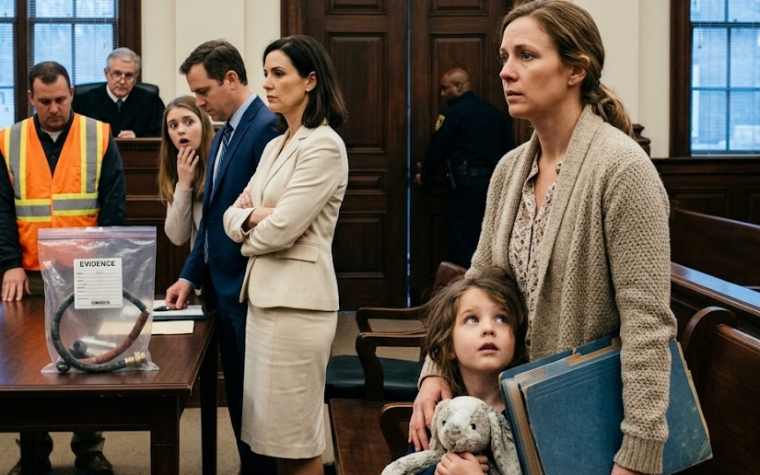
“No.”
One word.
The courtroom went still again.
“The integrity of the financial disclosures before this court has been called into substantial question.
I am ordering preservation of the relevant financial records and directing that the disputed assets be subject to independent forensic review.
No transfer, disposal, encumbrance, or extraordinary movement of the identified assets is to occur pending further order.”
Daniel’s face changed from pale to angry.
“She can’t freeze my businesses because of this.”
Judge Marlowe looked directly at him.
“I just ordered preservation of assets and records.
Whether additional relief is appropriate will depend on what the review establishes.”
Then she addressed Voss.
“Any previously undisclosed responsive material is to be produced.
If this court determines that evidence was knowingly withheld, I will address sanctions separately.”
Voss nodded once.
He did not smirk again.
The proposed ruling Daniel had celebrated minutes earlier was no longer moving toward entry.
The financial picture would have to be rebuilt.
Not by Daniel.
Not by me.
By an independent professional whose conclusions would become part of the court record.
That mattered more than victory in one morning.
Daniel had spent months insisting the case was my word against his.
Now it was his word against his own numbers.
Outside the courtroom, he caught up with me before I reached the elevators.
Noah was holding my hand.
“Lena.”
I kept walking.
“You have no idea what you’ve done.”
That sentence used to frighten me.
It sounded different now.
I stopped and turned, keeping Noah behind my shoulder.
Daniel’s tie was crooked.
I had never seen him leave it that way.
“I know exactly what I did,” I said.
Elise stood several steps behind him.
She looked as though she wanted to ask me something but could not decide whether she was still angry at me or suddenly afraid of him.
Daniel lowered his voice.
“Those businesses employ people.
You start tearing through accounts, innocent people get hurt.”
There it was.
The transformation.
For months, the money had been his achievement when he wanted to claim it and his separate property when I wanted it disclosed.
Now that someone might inspect it, the same money belonged emotionally to employees he wanted to place between himself and scrutiny.
“Then the records should show that,” I said.
The elevator doors opened.
I walked inside with Noah.
Daniel did not follow.
The forensic review took time, but it confirmed the central problem: the disclosures used to support Daniel’s position had not presented the complete financial picture.
Assets and transfers connected to entities under his control had been omitted or obscured.
The appraisal that had helped minimize one investment was challenged by underlying records and communications.
Transfers involving Elise’s charity required further explanation and documentation.
The former employee’s preserved messages became relevant to the inquiry into whether information had been intentionally concealed.
The court did not treat every accusation I had made as automatically proven simply because I had arrived with a black folder.
It did something more important.
It tested them.