Records were compared.
Ownership was traced.
Valuations were revisited.
People who had once spoken only through Daniel’s version of events had to answer specific questions under formal procedures.
The story changed because the evidence changed it.
Elise retained her own lawyer.
That decision ended whatever remained of her alliance with Daniel.
She produced records concerning the charity and maintained that Daniel had represented the transfers as legitimate contributions.
Whether she had known more was not something I could decide, and I stopped trying to guess.
She had betrayed me in ways no accounting could measure.
But Daniel’s financial conduct was no longer protected by her loyalty.
Voss became far less theatrical.
Arguments that I was merely bitter stopped carrying the same force once independent analysis began identifying discrepancies.
The court later revised the financial conclusions on which Daniel’s expected victory had depended.
Property he had argued was beyond my reach was reconsidered where the evidence showed marital funds, concealed interests, or inaccurate disclosures.
The final distribution did not give Daniel everything.
It did not give me everything either.
Courts are not machines for poetic justice.
They divide what can be proven, address misconduct within their authority, and leave other questions to other institutions.
But I received my lawful share based on a financial picture far closer to the truth than the one Daniel had presented that morning.
The court also addressed the cost created by the disclosure failures and the need for additional forensic work.
Matters suggesting conduct beyond the divorce itself were preserved for the appropriate authorities to evaluate rather than being transformed into instant courtroom convictions.
Daniel hated that most.
He could argue with me.
He could call me emotional.
He could tell Noah I had ruined everything.
He could not bully a bank record into forgetting where money had moved.
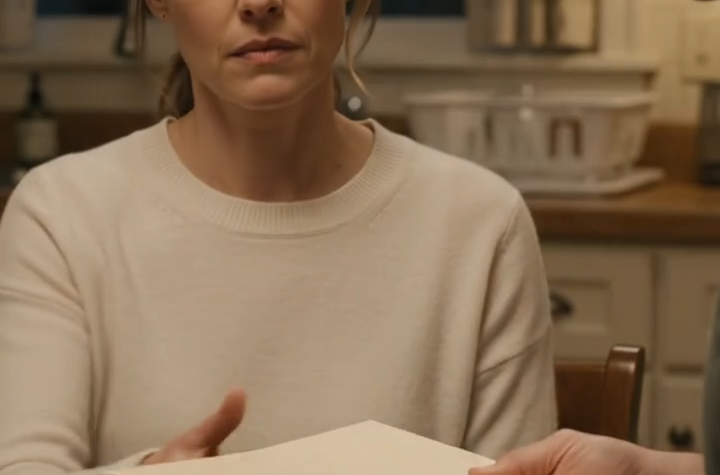
Months after the hearing, Noah asked me about the black folder.
We were sitting at a small kitchen table in the place we had moved into after the worst of the litigation.
It was not the house Daniel had locked us out of.
It was quieter.
It was ours to live in without waiting for a gate to open.
“Was that folder why Dad got scared?” he asked.
I considered giving him the easy answer.
Yes.
Instead I said, “Your dad got scared because people started asking questions he didn’t want to answer.”
Noah thought about that.
“Were you scared?”
“Yes.”
He looked surprised.
Children assume calm means absence of fear.
I wanted him to learn something better.
“Being scared doesn’t mean you have to give someone else control,” I told him.
He nodded as though he understood only part of it.
That was enough.
I never framed the black folder.
I never kept it as a trophy.
By the end, it was just paper inside a worn cover, copied, logged, reviewed, challenged, and absorbed into a case file.
But I remembered the moment before Judge Marlowe opened it.
Daniel had looked at me as though I had already disappeared.
His lawyer believed the argument was over.
Elise sat behind him wearing my former life like evidence of her victory.
And my son had been told to go to hell by his own father in a room full of adults.
That was the moment I stopped wanting Daniel to understand my pain.
Understanding was never going to change him.
Evidence could change what he was allowed to get away with.