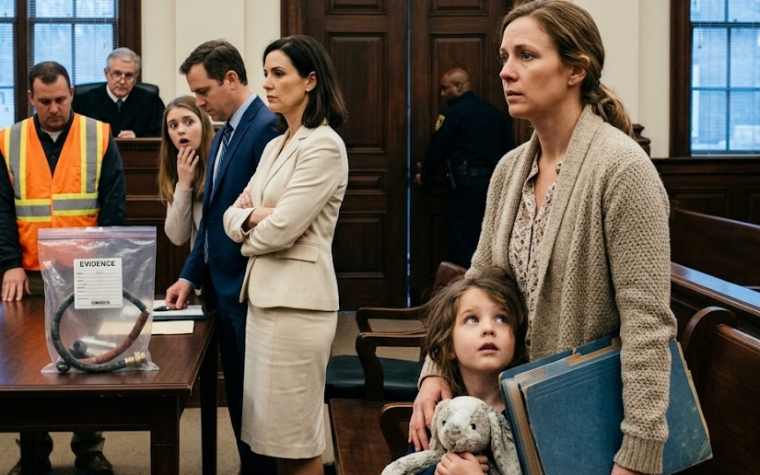
For several seconds, the courtroom remained completely still.
The judge looked at my father.
“Did you make that call?”
My father gripped the edge of the table.
“It was taken out of context.”
“It was a continuous recording.”
“She baited me.”
“Did she alter your voice?”
“No, but—”
“Did she force you to say you remembered signing the deed?”
My father turned toward his attorney.
“Do something.”
The attorney did not move.
The judge addressed him next.
“Counsel, do you dispute that your office prepared the deed marked as Exhibit A?”
The lawyer cleared his throat.
“No, Your Honor.”
“Do you dispute that you signed the instrument as a witness?”
“No.”
“Did you investigate your client’s allegation of forgery before filing the complaint?”
The attorney looked down at the folder my father had supplied him.
“My client represented that the original transaction was fraudulent and that he had never knowingly executed a deed.”
The judge’s expression did not change.
“That was not my question.”
The lawyer’s shoulders lowered.
“No, Your Honor.
I did not retrieve the archived file before filing.”
My father hissed, “You said this was simple.”
His attorney finally turned to him.
“You told me my former associate handled the transaction.
You told me you had never met me before this case.”
My father’s face reddened.
“That isn’t what I said.”
“It is exactly what you said.”
The judge raised his hand before their argument could grow.
“Counsel, you may want to consider whether continued representation is possible when you are a material witness to the instrument at issue.”
The attorney stood slowly.
“Your Honor, I request a brief recess to confer with my client and evaluate my ethical obligations.”
My father stared up at him.
“You’re not leaving me.”
The lawyer gathered his papers without looking at him.
“I need to speak with you outside.”
The judge granted fifteen minutes.
The bailiff opened the side door.
People in the gallery began whispering as they rose.
I remained at my table and closed the black folder.
My father crossed the aisle before the bailiff could stop him.
“You think this makes you clever?” he said under his breath.
I met his eyes for the first time that morning.
“No.”
“You recorded your own father.”
“I preserved evidence from an opposing party.”
His mouth tightened at the language.
He had expected a wounded daughter.
He had found opposing counsel.
“You always do this,” he said.