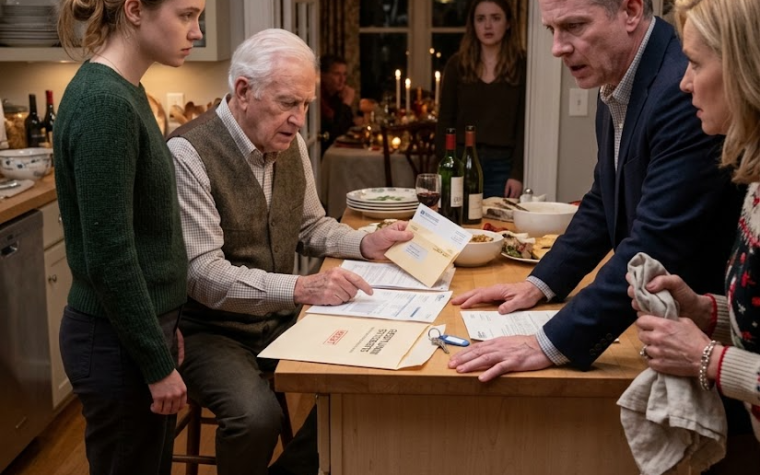
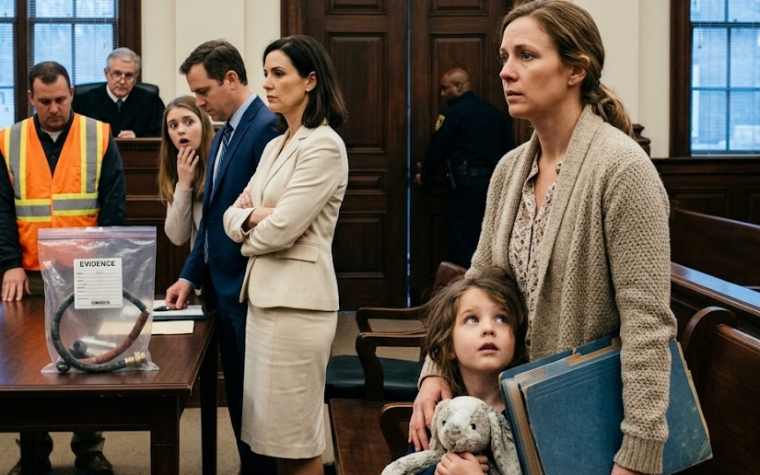
“You turn everything into a mission.”
“You filed a false complaint to take my home.”
“It was my home first.”
“Then you should not have signed it away.”
The bailiff stepped between us.
“Sir, return to your side.”
My father backed away, but his eyes stayed on me.
For most of my childhood, that look had been enough.
It had made me apologize when I was right, retreat when I had nowhere to go, and question facts I had watched unfold with my own eyes.
At seventeen, I had learned that peace in our house meant agreeing with him before he became angry.
At nineteen, I enlisted because distance felt like the only argument he could not win.
He called it running away.
I called it surviving long enough to become someone he could no longer define.
Years later, when I returned from deployment with a damaged knee and more silence than I knew how to carry, I learned that the house was weeks from a tax sale.
My father had borrowed against it, ignored notices, and spent months insisting the county would never act.
I paid the lien because the house still contained the few memories he had not managed to sour.
My mother’s recipe cards remained in a kitchen drawer.
Pencil marks from my childhood still climbed the pantry doorframe.
The backyard held the maple tree beneath which I had buried my first dog.
My father did not ask for a loan.
He proposed a sale.
I would clear the debt, and he would transfer the property to me.
He wanted enough money to move south and start over.
His own attorney prepared the deed.
Two witnesses watched him sign.
The notary asked him twice whether he understood the transaction.
He had smiled and said, “My daughter finally made herself useful.”
I remembered the sentence because cruelty rarely required effort from him.
What he had not expected was for the neighborhood to improve, property values to rise, and the small house he had discarded to become valuable again.
When the court reconvened, my father returned without his smirk.
His attorney stood beside him but did not sit.
“Your Honor,” he said, “I move to withdraw from representation.
My prior involvement in preparing and witnessing the deed creates a conflict, and I may be required to testify.
I also need to correct representations made in the complaint that I can no longer certify as having evidentiary support.”
My father surged to his feet.
“You can’t abandon me in the middle of a hearing.”
The judge looked at him.
“Mr.
Carter, sit down.”
“I paid him.”
“Sit down.”
My father sat.
The judge granted the withdrawal, then asked whether my father wished to request a continuance to seek new counsel.
My father looked around the room.
The strangers who had laughed earlier now avoided his eyes.
“I can speak for myself,” he said.
The judge gave him the same warning he had given me.
“You have the right to representation.
Proceeding without counsel may have serious consequences.”
My father glanced at me.
“I don’t need one.”
The irony passed through the courtroom without a sound.
The judge turned to me.
“Captain Carter, you filed a motion to dismiss, a request for sanctions, and a counterclaim for abuse of process and declaratory relief.”
“Yes, Your Honor.”
“Proceed.”