I looked at him.
“Our house.”
He turned toward me.
“Clara—”
“Don’t.”
It was the first time I had said the word to him without explaining myself afterward.
The agent asked my father about the documents.
Arthur told her exactly what he’d told me.
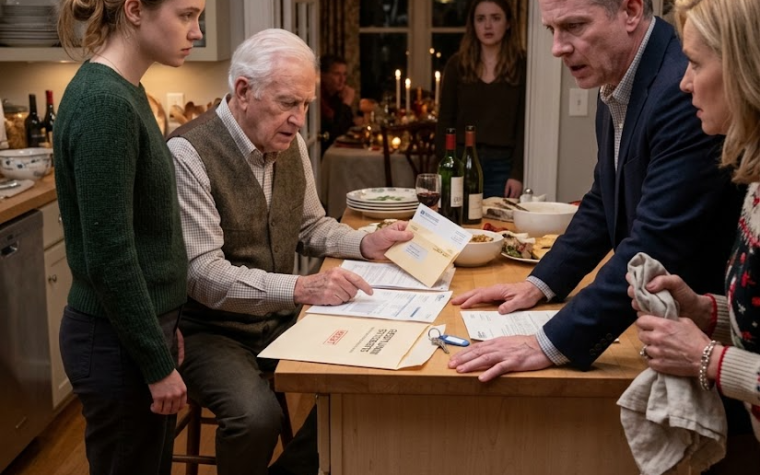
Mark had brought papers into the guest room two nights earlier.
He had told Arthur they were medical forms required before a nursing home could evaluate him.
Arthur had read enough to know they weren’t medical forms.
One authorized control over financial accounts.
Another allowed transfer of property.
A third could have been used to claim Arthur lacked the capacity to manage his own affairs.
“He told me where to sign,” Arthur said.
The agent looked at Mark.
“Did you prepare those documents?”
“No.”
Arthur removed the black pen from his shirt pocket.
Mark’s face changed again.
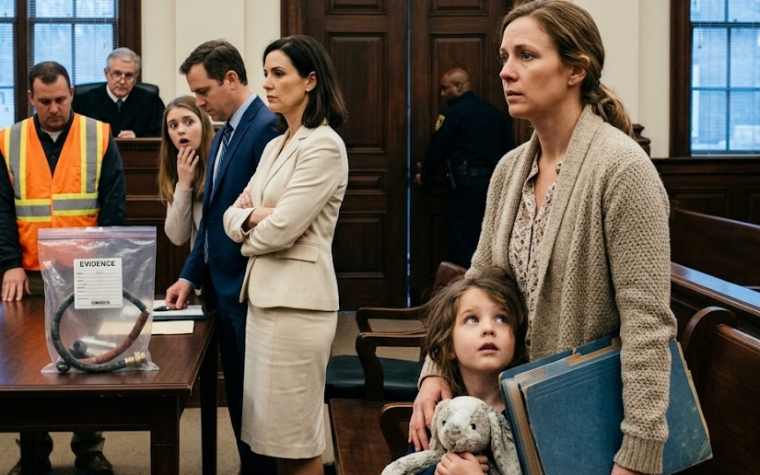
The agent held out an evidence bag.
Arthur placed the pen inside.
“He recorded the conversation,” she said.
Mark gave a harsh laugh.
“That’s illegal.”
One of the suited men finally spoke.
“Whether the recording is admissible for every purpose is a legal question.
It doesn’t make the underlying conduct disappear.”
Mark’s confidence flickered.
The agent continued.
“We also have documents recovered from your possession.”
“Recovered? Clara stole them from my drawer.”
I almost couldn’t believe him.
“You mean the drawer containing my forged signature and my father’s missing deed?”
Mark looked at me with the same expression he used when he wanted me to doubt what I had seen.
“You don’t understand finances.
I was helping him.”
Arthur’s eyes lifted.
“You broke my cane.”
Mark’s jaw tightened.
“That has nothing to do with finances.”
“You threw away my medication.”
“You take too much junk.”
“You locked me outside barefoot.”
“You wandered outside.”
The agent looked toward me.
“Did you find your father outside?”
“Yes.”
“Was the door locked?”
“Yes.”
Mark interrupted.
“This is insane.
He’s manipulating her.”
My father gave him a tired look.
“You keep calling me helpless and dangerous in the same sentence.
Pick one.”