“It isn’t.”
“You really want to destroy our marriage over your father?”
That sentence gave me the final answer I needed.
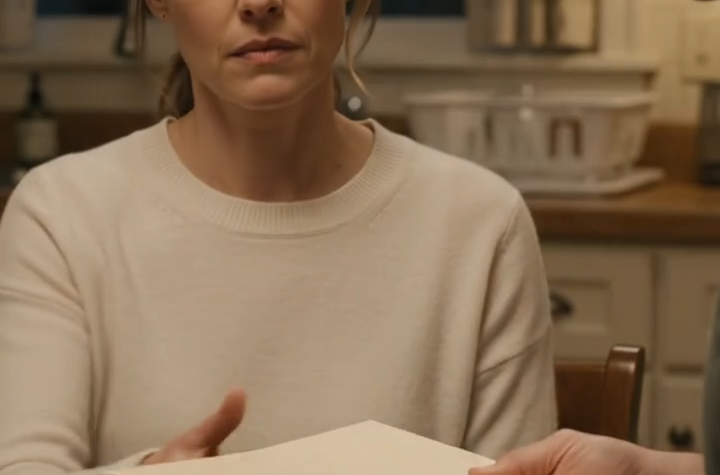
Even then, with federal investigators standing in our kitchen and forged documents on the table, Mark still believed the real offense was my refusal to protect him.
“No,” I said.
“You destroyed it when you decided the people I loved were things you could control.”
He stared at me.
I didn’t raise my voice.
I didn’t slap him again.
I didn’t need to.
The men escorted him out.
At the doorway he twisted around and looked at Arthur.
For the first time since my father had arrived, Mark didn’t look contemptuous.
He looked afraid.
Arthur met his eyes without satisfaction.
That surprised me.
I had expected triumph.
There was none.
After the door closed, my father simply looked exhausted.
The nursing home called twenty minutes later.
I answered before they could send anyone.
I told them Arthur would not be going anywhere and that any authorization not personally confirmed by him was disputed.
The agent helped us identify which financial institutions needed immediate notification.
Accounts connected to suspicious applications were flagged for review.
The attempted transfers and authorizations were challenged before Mark could gain control of Arthur’s property.
The Ohio house remained Arthur’s.
His bank accounts remained his.
My forged signature became evidence rather than permission.
Over the following weeks, investigators examined Mark’s financial activity and his connection to the network Arthur had recognized.
I learned that the documents in our bedroom were not an isolated improvisation.
They fit a broader pattern under investigation.
Arthur’s recording, the recovered paperwork, account records, and Mark’s own statements became pieces of that case.
Not every question was answered immediately.
Real investigations don’t end in a kitchen with dramatic music.
There were interviews.
Phone calls.
Statements.
Lawyers.
Bank reviews.
And long evenings when Arthur and I sat at that same kitchen table trying to understand how close we had come to losing far more than money.
I also reported what had happened inside the house.
The marks on my wrist were photographed.
Arthur’s broken cane was documented.
His doctor reviewed the risk created by the missing medication and the time he had been locked outside.
I filed for protection and began ending my marriage.
Mark’s threats stopped sounding powerful once they were written down and repeated to people who didn’t depend on his version of reality.
One afternoon, I drove Arthur to replace his cane.
He tested several before choosing a dark wooden one with a simple curved handle.
“This one won’t scratch the floor,” I said.
He looked at me.
For one terrible second I worried I’d said the wrong thing.
Then he laughed.
A real laugh.
The kind I hadn’t heard since before Mom died.
“Sweetheart,” he said, “it’s your floor too.”
I cried in the store.