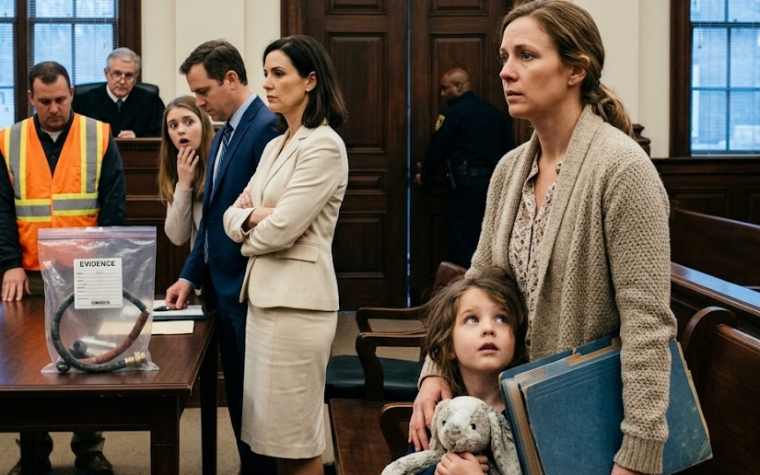
“You got into her house,” he said.
“You drove her places.
You made yourself useful, and then you got her to sign something.”
“I didn’t know about this.”
“Of course that’s what you’ll say.”
His sister touched his arm.
“Not here.”
He pulled away from her.
“If you try to take our mother’s house, we will stop you.”
I looked down at Sarah’s handwriting pressing faintly through the envelope.
“I’m going to call the number she gave me.”
Then I walked out before anger could make me say something I would regret.
I sat in my car for nearly twenty minutes with the doors locked.
The key rested in my palm.
It was old brass, worn smooth around the teeth.
I had knocked on Sarah’s door every Thursday for months.
She had always taken several slow minutes to reach it.
Now I held the key she could have given me at any time but had chosen to place inside a final letter.
I called the attorney.
A woman answered after the second ring.
When I gave her my name, she became quiet.
“Sarah told me you might call today,” she said.
The sentence made my chest hurt.
“She told you about me?”
“She told me enough.
Do you have the original letter, the key, and the filing receipt?”
“Yes.”
“Keep them with you.
Do not hand them to her children, do not sign anything, and do not enter the house until we speak.”
“Is the house really mine?”
Another pause.
“Sarah executed a beneficiary deed naming you.
It was recorded before her death.
We still need to file the required documents, but yes, that was her intention.”
I pressed my forehead against the steering wheel.
“I didn’t ask her to do that.”
“I know.”
“How?”
“Because she met with me alone.”
The attorney explained that Sarah had first contacted her several months earlier.
She wanted to know whether she could decide who received the house without placing the property into a long probate fight.
The attorney had refused to prepare anything until she was satisfied Sarah understood what she was doing.
They met twice.
A notary witnessed the signing.
Sarah answered questions about the house, her family, her finances, and the effect of the deed.
I had not been present.
My name had not even been mentioned to me.
“Her children have already called,” the attorney said.
“They believe the house belongs to the estate.”
“What happens now?”
“They may challenge the deed.
If they do, they will likely claim incapacity or undue influence.”
“Can they take it?”
“They can make this difficult.
That is not the same as being right.”
The next morning, I met the attorney in a quiet office above a pharmacy.