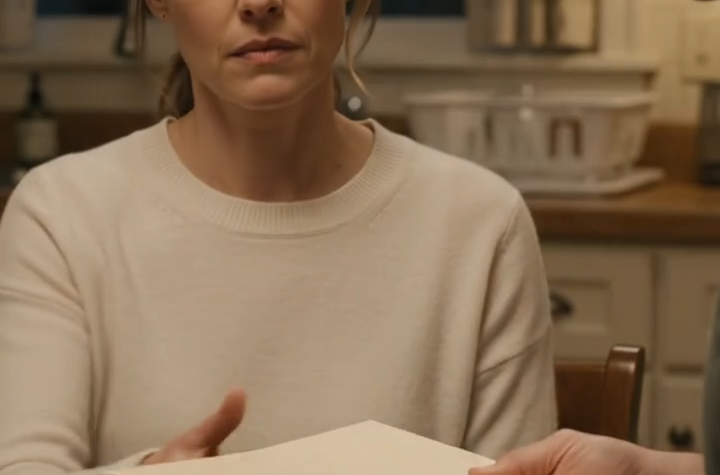
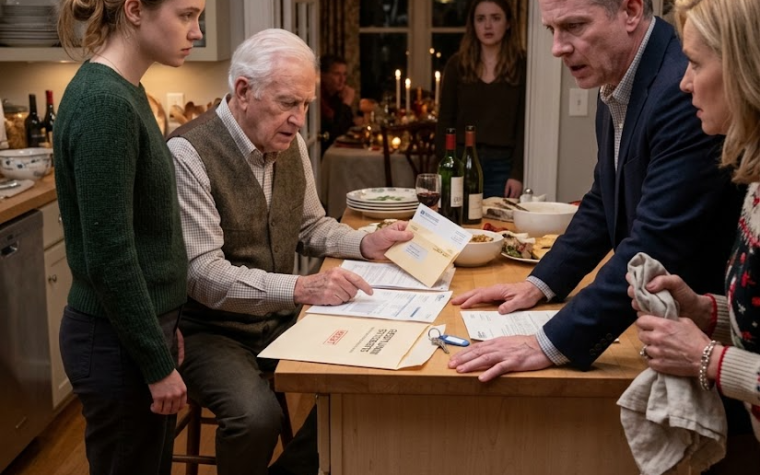
Her mouth tightened when she reached the part about Sarah having more house than cash.
Then she stopped at the sentence about becoming an obligation.
“I called her,” she said quietly.
Her brother looked at her.
“Don’t.”
“I did call,” she repeated, as though arguing with the letter.
“I just couldn’t come every week.”
No one answered.
The room was not a courtroom, and I was not there to punish her.
I knew what it was like to be overwhelmed, short on money, short on time, and ashamed of what you could not provide.
But Sarah had spent her last months waiting for footsteps that rarely came.
Her daughter turned to me.
“Was she afraid?”
“Sometimes,” I said.
“Mostly when her pain was bad.
She hated asking for help.”
“Did she talk about us?”
“Yes.”
“What did she say?”
I thought of the faded family photographs in the hallway, each one dusted and placed upright again.
“She said you were busy.
She said she didn’t want to bother you.”
The daughter’s eyes filled, but she did not cry.
Sarah’s son stood abruptly.
“This is emotional theater.
The house should stay in the family.”
Sarah’s attorney slid the recorded deed across the table.
“Sarah decided where it would stay.”
He walked out.
His sister remained seated for another minute.
Then she folded her copy of the letter and placed it carefully beside the receipts.
“I didn’t know her refrigerator was empty,” she said.
“I didn’t know at first either.”
She nodded once and followed her brother.
Three days later, their attorney notified us that the challenge would be withdrawn.
There was no dramatic courtroom ruling.
No judge struck a gavel.
Sarah’s son never apologized, and no one admitted that they had been wrong about me.
The paperwork simply moved forward.
A certified death record was filed.
The beneficiary documents were accepted.
The county updated the ownership record.
The attorney called me after my afternoon class.
“It’s complete,” she said.
“The house is legally yours.”
I sat alone on a bench outside the library, in almost the same place where I had first seen the cleaning job months earlier.
Students passed carrying coffees, laptops, and problems that still belonged to the living.
I took the brass key from my pocket.
When I entered Sarah’s house again, the air smelled like dust and lemon cleaner.
Her children had removed some clothes and personal items with the attorney’s permission.
Most of the furniture remained.
The broken radio still sat on the shelf.
The faded photographs were stacked neatly on the dining table for the family to collect.
The kitchen light flickered when I switched it on.
For a moment, I expected to hear Sarah’s cane tapping against the hallway floor.
I opened the refrigerator.