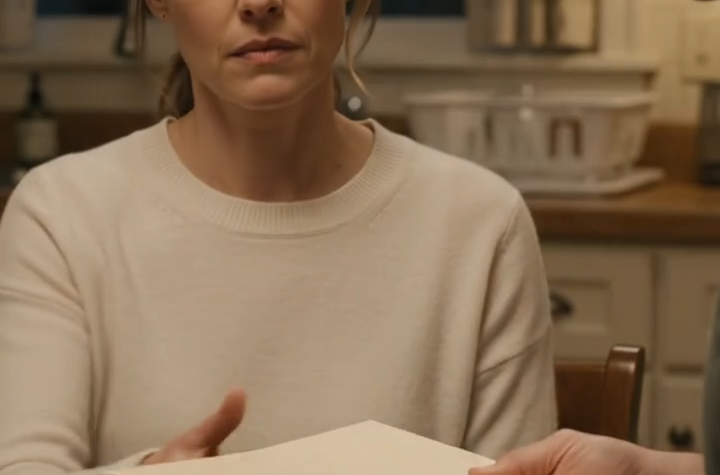
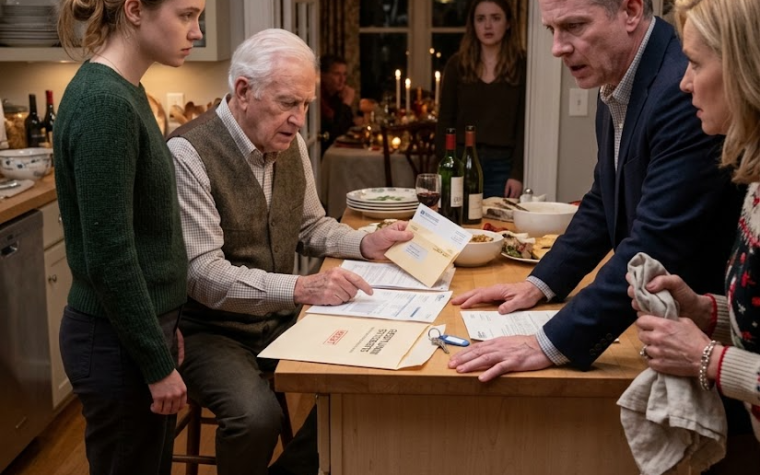
“What did you tell her?”
“That love can survive inside anger.
But it can’t live there forever.”
From the kitchen came the soft clink of spoons against mugs.
I bowed my head.
“I brought no check,” I said.
“No offer.
No condition.”
“Good.”
“But there is something I need to change.”
I explained that the Bennett family trust still contained the clause my lawyers had used against her.
It allowed distributions to be delayed if an heir acted against the company’s interests.
I had once considered it prudent.
Now I understood it as a chain.
“Tomorrow I am removing it,” I said.
“For everyone.
No one in this family will have to earn belonging by obeying a company.”
She studied me.
“You think changing a document fixes this?”
“No.
It fixes a document.
I’ll have to repair the rest without paper.”
The following morning, I entered the Bennett Transportation boardroom and placed the amendment before the company’s attorneys.
I removed every condition tying family inheritance to employment, residence, marriage, or participation in the business.
Then I resigned as executive chairman.
The board protested.
Reporters called.
People who had praised my control for decades suddenly described my decision as emotional.
They were correct.
I had spent my life pretending emotion was a weakness while allowing pride to make some of my most expensive decisions.
Stepping down did not return the lost years.
It simply prevented me from using power as a substitute for love again.
That afternoon, I carried the twelve letters to my granddaughter’s apartment in the same old leather folder I once used for contracts.
She opened the first letter but did not read it while I was there.
“These don’t erase anything,” she said.
“I know.”
“I’m not ready to call you Grandpa.”
“Richard will do.”
“And you cannot arrive with gifts every time you feel guilty.”
“That may be my most difficult assignment.”
She almost smiled.
She allowed me to return the following Sunday.
Then the Sunday after that.
We did not rebuild twelve years in a single conversation.
Some visits ended with laughter.
Others ended when one of us touched a wound neither of us yet knew how to handle.
I learned to apologize without asking whether the apology had been accepted.
She learned that allowing me inside did not mean surrendering her independence.
Emma made the rules simpler.
She wanted pancakes, bus rides, and stories about the days when her grandmother was small enough to sleep across two vinyl seats while I inspected routes.
Her mother—the great-granddaughter I had failed to recognize at the bus stop—remained cautious longest.
I did not blame her.
She had grown up hearing that my love arrived with contracts attached.
So I gave her none.
I showed up when invited.
I listened.