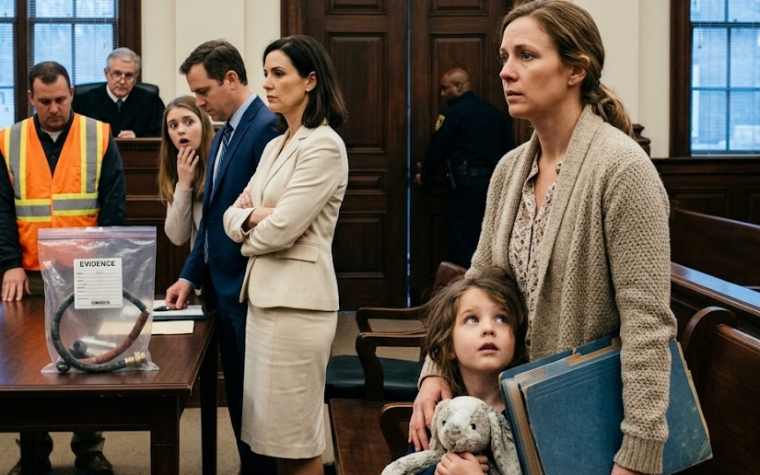
“This required planning, deception, and repeated opportunities to reconsider.”
She awarded me temporary custody of Mia and ordered that neither parent have unsupervised contact.
Leo’s placement was reviewed separately, with his wishes and safety considered rather than treating him as a prize in the dispute.
The financial investigation found that Austin had misrepresented the cruise charge and attempted to lock me out of the account.
He eventually agreed to repay the funds as part of a settlement.
The cruise company reversed several unused portions after the family was removed from the voyage.
Both parents faced child neglect charges.
Austin entered a guilty plea and received probation, community service, mandatory counseling, and restitution obligations.
Monica accepted a separate plea that required parenting education, psychological evaluation, and supervised visitation.
Neither returned to the life displayed in their vacation photographs.
The polished images disappeared from Monica’s page.
The house was sold months later when their legal bills and debts became impossible to ignore.
Their marriage did not survive the investigation, largely because each continued blaming the other for decisions they had made together.
Mia did not celebrate any of that.
She began therapy with a counselor who specialized in childhood neglect.
For months, she hid snacks in her bedroom and asked permission before opening the refrigerator.
She woke at 2:03 several nights in a row and checked whether I was still in the house.
I began leaving a glass of water beside her bed.
Not because she needed permission to get one herself.
Because I wanted her to see, before falling asleep, that someone had remembered she might be thirsty.
Leo visited every Saturday.
At first, he tried to give Mia his food and toys out of guilt.
The counselor helped him understand that loving his sister did not require punishing himself for being taken on the cruise.
They slowly became children together again.
They argued over television shows.
They built a blanket fort in my living room.
They planted tomatoes in the yard and forgot to water them until I reminded them.
Ordinary problems replaced impossible ones.
Six months after the night Mia called me, we took a short train trip to visit an aquarium.
At the station cafe, a woman behind the counter offered Mia a warm cookie.
Mia looked at the price board automatically.
Then she looked at me.
I expected the old question in her eyes.
Instead, she smiled and said, “Can Leo have one too?”
“Of course,” I told her.
She accepted both cookies without apologizing.
As we walked toward the train, she held one in each hand and talked excitedly about sharks, jellyfish, and whether octopuses could recognize grandparents.
She sounded like herself again.
I still keep the yellow note in a locked file with the court papers.
Not because I want Mia to remember the worst night of her childhood, but because evidence matters when cruel people depend on silence.
Austin and Monica believed leaving a child behind would remain a private choice hidden beneath beautiful photographs.
They believed money could create the appearance of a happy family and distance could protect them from consequences.
They were wrong.
A frightened girl found one working device.
She whispered one word into the dark.
“Grandpa?”
And someone answered.